POC IZNC - Integrated Care Network Communication - Local Development build (v0.1.2) built by the FHIR (HL7® FHIR® Standard) Build Tools. See the Directory of published versions
POC IZNC - Home
| Official URL: https://gidsopenstandaarden.github.io/poc-iznc | Version: 0.1.2 | |||
| Draft as of 2025-11-24 | Computable Name: gidspociznc | |||
Proof of Concept - Integrated Care Network Communication (IZNC)
Version: 0.1.1 (2025-01-14)
📋 Overview
This is a proof-of-concept implementation for connecting a healthcare chat application to the Matrix specification for instant network communication via Matrix protocol.
Goal: Demonstrate how a commercial healthcare chat application can integrate with the federated care network via Matrix using a simple BSN-based API.
🏗️ Architecture (High-Level)
┌──────────────────────────────────────────┐
│   Chat Application Frontend              │
│   - User login via DigID (BSN)           │
│   - WebSocket for real-time updates      │
└──────────────────┬───────────────────────┘
                   │
                   ▼
┌──────────────────────────────────────────┐
│   Chat Application Backend               │
│   - Handles DigID authentication         │
│   - Manages user sessions                │
│   - Stores BSN in session                │
└──────────────────┬───────────────────────┘
                   │
                   ▼
┌──────────────────────────────────────────┐
│      Matrix Bridge API (NEW)             │
│   - BSN-based user discovery             │
│   - Care network/thread management       │
│   - Message operations                   │
│   - Webhook event notifications          │
│   - Implements Matrix Spec INNC          │
└──────────────────┬───────────────────────┘
                   │
                   ▼
┌──────────────────────────────────────────┐
│       Matrix Homeserver (Synapse)        │
└──────────────────────────────────────────┘
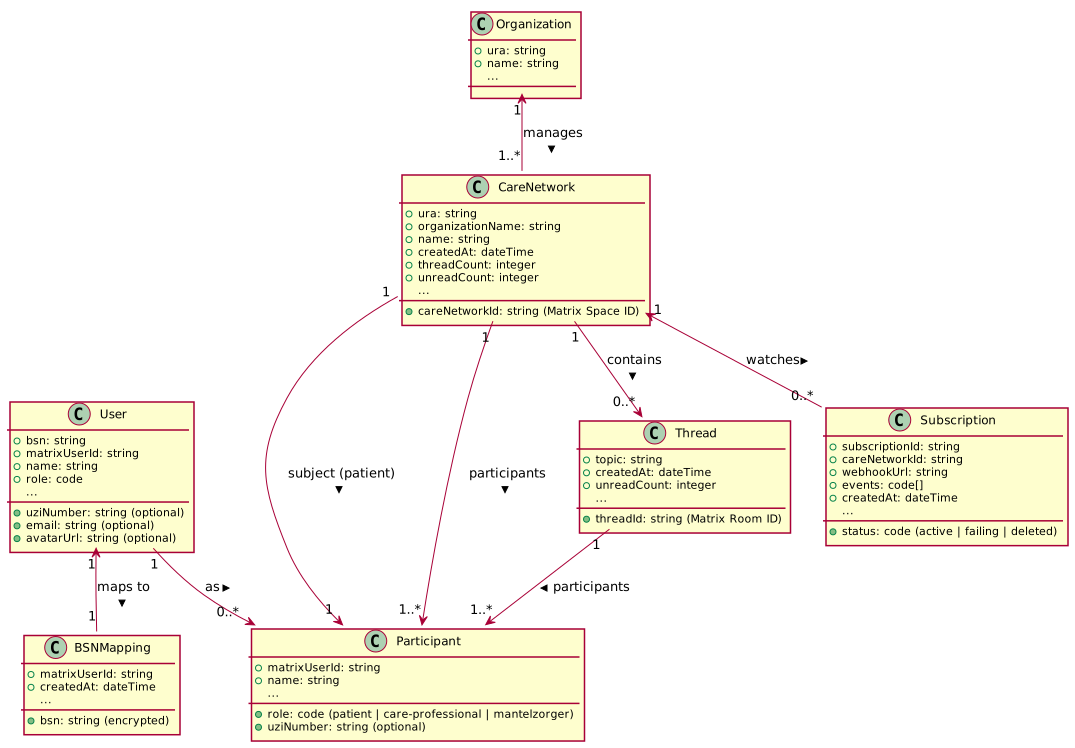
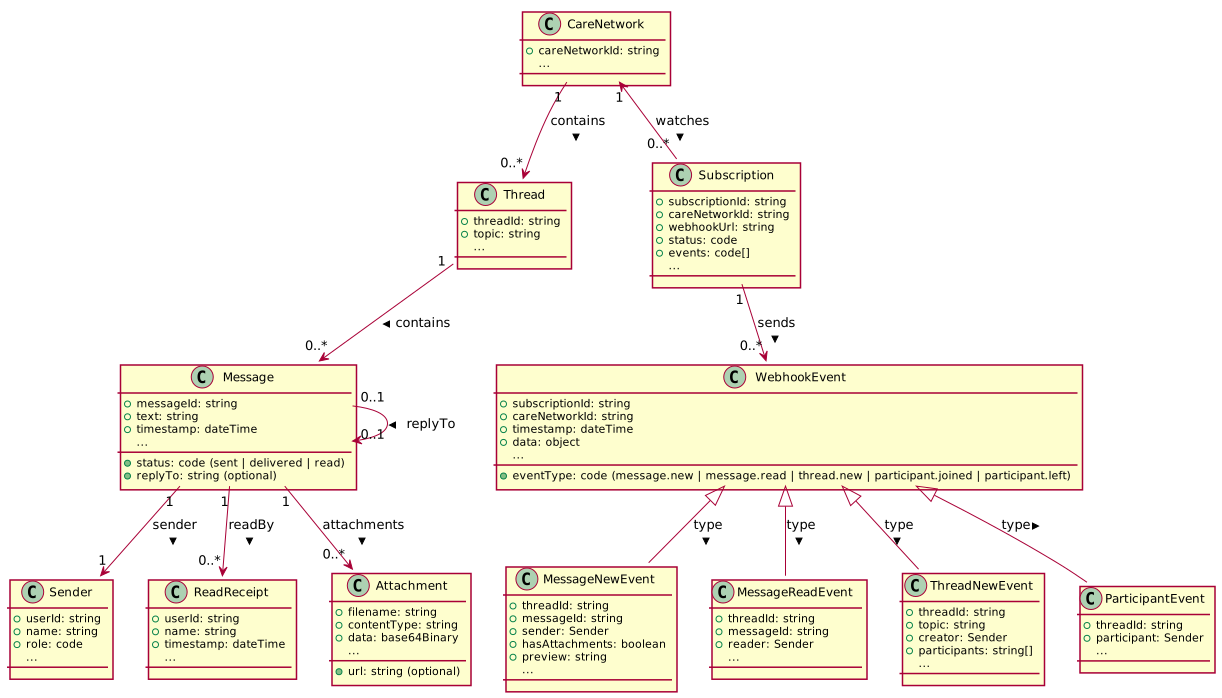
Data Models
Network Structure
Message Structure
🎯 Key Concepts
Identity Model
The architecture uses a BSN abstraction layer to hide Matrix complexity from the chat application:
- Chat Application Backend works with BSN only
- User logs in with DigID → BSN obtained
- All API calls contain BSN in request body
- Matrix user IDs never visible to chat backend
- Matrix Bridge manages BSN ↔ Matrix user ID mapping
- Encrypted storage of BSN → Matrix user ID
- Auto-provisioning: first BSN use = Matrix account creation
- Matrix user ID format:
@iznc_{hash}:homeserver.example.com
- Matrix Specification Compliance
- BSN only in Matrix invite events (per Matrix spec)
- After that, only Matrix user IDs in Matrix protocol
- External API continues to use BSN for simplicity
Care Network Structure (per Matrix Spec)
- Matrix Space = CareTeam (care network around a client)
- Contains all care providers and informal caregivers
- Power levels determine rights (100=lead, 75=care provider, 50=informal caregiver, 25=client)
- Matrix Room = Conversation Thread
- Child rooms within the space
- Specific topic/question
- Subset of space members
- Custom State Events
custom.user_mappings: FHIR identity per user (UZI, URA, roleCode)m.space.child/m.space.parent: hierarchy
📄 API Specifications
This POC implements a Custom Matrix Bridge API with BSN mapping database.
Documentation:
- Matrix Bridge API - RESTful API that Chat Backend calls
- Chat Backend Webhook API - Webhook endpoints for event notifications
Features:
- Custom REST endpoints with simple JSON (no FHIR knowledge required for Chat Backend)
- Database for BSN ↔ Matrix user ID mapping
- Auto-provisioning of Matrix accounts on first use
- Webhook notifications to Chat Backend
- BSN in all requests (POST body, never URL)
Architecture:
Chat Backend → Matrix Bridge API → Matrix Homeserver
                   ↓
              Database (BSN mapping)
🔐 Security & Privacy
BSN Handling
Critical Security Rules:
- ❌ NEVER BSN in URL parameters (web server logs, proxy logs, browser history)
- ✅ Always BSN in POST request body
- ✅ HTTPS required (also internal network)
- ✅ No BSN logging in application logs
- ✅ Encrypted storage of BSN ↔ Matrix user ID mapping
Design Pattern:
❌ Bad:  GET /api/v1/care-networks?bsn=123456789
✅ Good: POST /api/v1/care-networks/discover
         Body: { "bsn": "123456789" }
Matrix Bridge Database
- Encrypted at rest
- Only BSN ↔ Matrix user ID mappings
- BSN never in Matrix homeserver itself
- Access control on mapping database
🚀 Implementation
For detailed API specifications and implementation details, see:
- Matrix Bridge API - Matrix Bridge API endpoints
- Chat Backend Webhook API - Webhook event notifications
📚 Reference Documentation
Matrix Specification for Instant Network Communication
See the Matrix specification for instant network communication for the complete specification, including:
- Identity & Authentication: UZI/URA 3PIDs, homeserver assignment
- Communication Model: Spaces (CareTeams), Rooms (threads), Power levels
- Onboarding: Healthcare provider vs RelatedPerson vs Client flows
- Service Discovery: mCSD, LRZA, Generic Function Addressing
- FHIR Mapping: Organization, Practitioner, PractitionerRole, Patient, RelatedPerson
mCSD and Generic Function Addressing
See mCSD and Generic Function Addressing for understanding the role of mCSD in POC IZNC:
- Identity Scope: BSN (patients) vs UZI/URA (practitioners/organizations)
- POC Context: Why mCSD is not required for core BSN-based discovery
- Potential Use Cases: Practitioner enrichment and invitation features
- mCSD Resources: Organization, Practitioner, PractitionerRole with Matrix IDs
- Future Integration: Optional enhancement for cross-organization practitioner discovery
Hackathon Experience
See the Hackathon Guide for:
- Live OZO test environment endpoints
- Cross-homeserver federation demo
- Success criteria for interoperability
📞 Support & Contact
For questions about this POC or the Matrix specification:
- Matrix specification for instant network communication: GitHub Repository
- Matrix Protocol: https://spec.matrix.org/
📝 License
This documentation follows the license of the Matrix specification for instant network communication: Attribution-ShareAlike 4.0 International (CC BY-SA 4.0)
Version: 0.1.1 Status: Draft Specification - Open for Review Last Update: 2025-01-14